
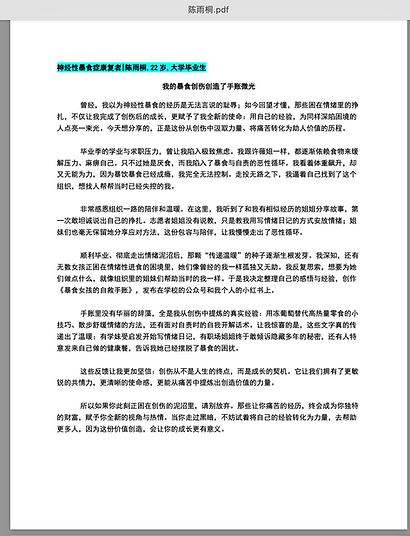
Note: The image on the left shows the original Chinese text written by the speaker; the speaker’s full name has been covered for privacy. The text on the right shows the English translation.
There was a time when I believed my experience with bulimia nervosa was an unspeakable shame. Looking back now, I understand that the struggles trapped in those emotions not only led me to grow through the trauma but also bestowed upon me a new mission—to use my own experience to light a candle for those still lost in similar darkness. Today, I want to share this very journey of drawing strength from trauma and transforming pain into value that helps others.
During graduation season, the immense pressure from academics and job hunting plunged me into extreme anxiety. Like Xu Wei, I too gradually turned to food to cope with stress and numb myself. The difference was that while she struggled with anorexia, I fell into the vicious cycle of binge eating and self-loathing. I watched my weight skyrocket, feeling utterly powerless because the binge eating had become an addiction I couldn't control. Having nowhere else to turn, I forced myself to find this organization, desperately seeking help for the version of me that was spiraling out of control.
I am profoundly grateful for the companionship and warmth the organization offered me every step of the way. Here, I heard stories shared by women who had walked similar paths, and for the first time, I dared to speak openly about my own struggles. The volunteers never lectured; instead, they taught me to channel my emotions through keeping an emotional journal. The women here also shared their coping methods unreservedly. This acceptance and companionship helped me slowly break free from the cycle.
After graduating successfully and fully emerging from that emotional quagmire, the seed of "passing on warmth" began to take root and grow. I know deeply that countless girls are still trapped in the struggle of emotional eating, feeling as lonely and helpless as I once did. I kept thinking, wanting to do something for them, just as the women here had done for me. So, I decided to compile my own insights and experiences and created The Binge Eating Girl's Self-Help Journal, publishing it on the university's official account and my personal RedNote page.
The journal contains no fancy rhetoric, only the real lessons I distilled from my trauma: little tricks like using frozen grapes as an alternative to high-calorie snacks, methods like taking walks to soothe my nerves, and the words I used to talk myself down from self-blame. To my surprise and delight, these words genuinely conveyed warmth: a junior was inspired to start her own emotional diary, a working professional finally found the courage to confide a secret she'd hidden for years, and someone even sent me a photo of a healthy meal they'd made, telling me they had broken free from binge eating.
These responses strengthened my belief: trauma is never the end of one's story; it is an opportunity for growth. It grants us sharper empathy, a clearer sense of purpose, and a greater ability to extract creative, valuable strength from our pain.
So, if you find yourself stuck in the mire of trauma right now, please don't give up. The experiences causing you pain will ultimately become your unique assets, endowing you with a new perspective and passion. When you eventually walk out of the darkness, consider transforming your experience into a force for good—to help more people. This act of creating value will make your growth profoundly meaningful.